
Know the five basic tastes and understand why salt doesn't just taste salty but also enhances other tastes and tones down bitterness.
The five basic tastes
The building blocks of any dish
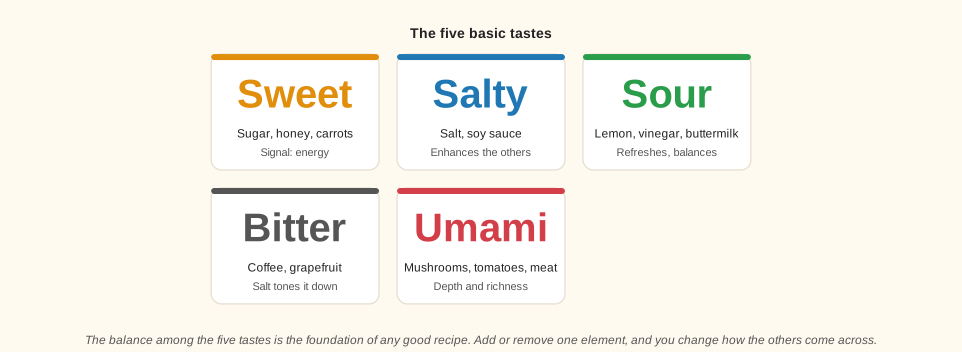
Every taste sensation is built from five basic tastes. Salt doesn't just make food salty — it enhances sweetness and sourness and tones down bitterness.
Lesson notes
Why a pinch of salt saves a dish
Your tongue distinguishes five basic tastes: salty, sweet, sour, bitter, and umami (umami gets a lesson of its own). Most “flavor failures” at home come not from a lack of spices but from these five being out of balance.
Salt is the most underrated tool. Besides its own saltiness, it does two more things. First, it enhances your perception of other tastes and aromas: an undersalted soup tastes “hollow” and flat, even though it has vegetables and meat in it. Add a pinch of salt, and the same flavors suddenly get brighter. Second, salt tones down bitterness. That's why salt goes even into sweets: a pinch of salt in caramel, chocolate, or dough deepens the flavor and removes any bitter edge.
It also matters when you salt. Salt added during cooking has time to spread and penetrate the food, so the seasoning is even, “from the inside.” Salt added only at the end sits on the surface and hits the tongue sharply, in spots. Both techniques are useful: the main salt goes in as you cook, and a final pinch (for example, flaky salt on a steak) adds a bright accent.
The principle: before you reach for another spice, try adding more salt. Very often, “something's missing” simply means salt.