
← Financial Modeling in Excel from Scratch
Lesson
The P&L, the balance sheet, and the cash flow statement: what each one shows
Tell apart the purpose of the three statements and their core equations: the P&L (revenue − expenses = profit), the balance sheet (assets = liabilities + equity), and cash flow (cash inflows/outflows).
The three financial statements: purpose and key equation
The P&L, the balance sheet, and the cash flow statement — three different views of a business
Each of the three statements answers its own question and describes the company from a different angle — together they give the full picture.
Lesson notes
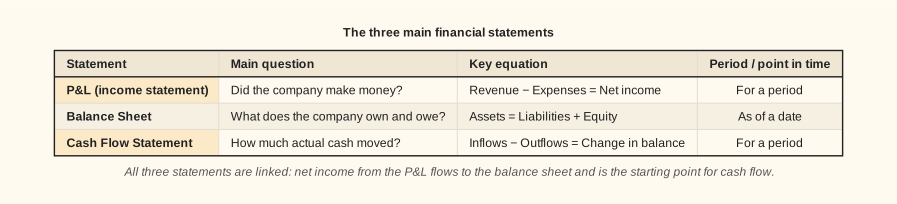
The three main financial statements
Financial statements consist of three linked documents. Each answers its own question and has its own key equation.
The P&L, or Income Statement, shows the result of operations for a period: revenue − expenses = profit. If a company sold goods for $1,000,000 and spent $700,000, its net income is $300,000. The P&L doesn't tell you where the cash is now — only whether the period was profitable.
The Balance Sheet is a snapshot as of a specific date: what the company owns (assets) and where it came from (liabilities to creditors + equity). The main equation: Assets = Liabilities + Equity. It must always hold — hence the name “balance sheet.”
The Cash Flow Statement records actual cash receipts and payments over a period. It has three sections: operating (cash from the core business), investing (buying/selling assets), and financing (loans, dividends, issuing shares). Cash flow answers the question: will there be enough cash to pay the bills?