
Understand what gluten is, how it forms during kneading, and why its development needs to be controlled (a lot for bread, little for tender baked goods).
How gluten forms
From flour to the framework of dough
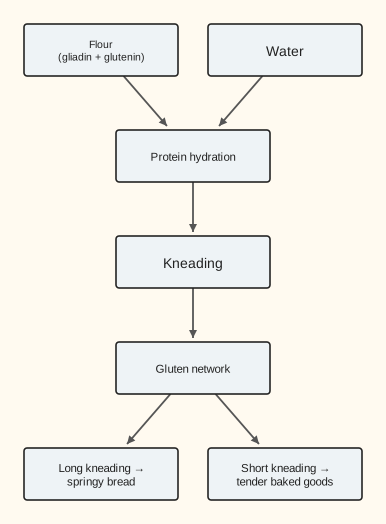
Gluten doesn't exist in dry flour — it forms only when flour proteins meet water and are worked mechanically (kneading). The longer you knead, the stronger the framework.
Lesson notes
Why dough stretches
Take flour and add water, and you get a sticky mass. Knead it, and it becomes springy and stretchy. Gluten is responsible for that.
Wheat flour contains special proteins. On their own they're inert, but as soon as flour meets water and the dough is kneaded, these proteins link up into an elastic network — that's gluten. The gluten network works as a framework: it holds its shape, stretches, and, importantly for yeast bread, traps gas bubbles inside. The longer and harder you knead, the stronger and more elastic this network becomes.
Now the main practical takeaway: different baked goods need different amounts of gluten. For bread and pizza, gluten is good: the dough has to stretch and hold bubbles, so it's kneaded for a long time. But for tender things — cakes, cookies, sponge cake, shortbread dough — a lot of gluten is bad: the result turns tough and “rubbery.” So this kind of dough or batter is mixed very little, just until the ingredients come together.
Two factors strengthen gluten: water (without it, no network forms) and mechanical work (kneading). Fat slows it down: it coats the proteins and keeps them from bonding. That's why shortbread dough has a lot of butter — it makes the result crumbly rather than stretchy.