
← Financial Modeling in Excel from Scratch
Lesson
How the statements link: net income, retained earnings, and the cash balance
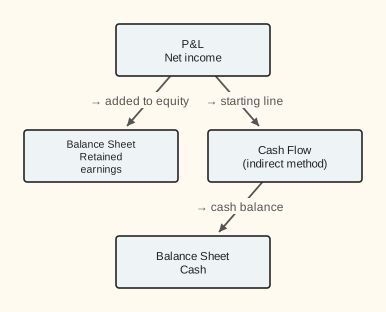
Trace how the statements link: net income from the P&L flows into retained earnings on the balance sheet and to the top of the indirect cash flow statement, and the ending cash balance on the cash flow statement equals the cash on the balance sheet.
How the three statements pass data to each other
Net income — the link between the P&L, the balance sheet, and Cash Flow
The three statements aren't independent documents: net income travels from the P&L to the balance sheet and to the top of the indirect cash flow statement.
Lesson notes
One flow of data through the three statements
The three statements aren't separate documents but a single system. Data flows from one to another in a strict order.
The first link: net income and retained earnings. Net income is the last line of the P&L. It goes to the Equity section of the balance sheet and increases retained earnings: Retained earnings (end of period) = Retained earnings (beginning of period) + Net income − Dividends. If a company earned $300,000 and paid $50,000 in dividends, retained earnings will grow by $250,000.
The second link: net income and cash flow. Under the indirect method, the cash flow statement starts with net income. Then non-cash expenses (such as depreciation) are added back and changes in working capital are taken into account (an increase in receivables is subtracted, an increase in payables is added). The result is the actual cash flow from operations.
The third link: the cash balance. The ending cash balance on the cash flow statement (the total of all three sections plus the beginning balance) exactly equals the Cash line in the assets on the balance sheet as of the same date. If these numbers don't match, the model has an error.