
← The Green Windowsill: Houseplants Without Casualties
Lesson
Lesson 2. Matching plants to the light and reading the signs of too little light
Understand how a plant itself tells you it's getting too little or too much light, and choose plants for the light you really have, not the other way around.
Three light categories
Measure the light first — then choose the plant
Light falls into three practical categories. Once you know yours, you can immediately rule out plants that won't suit it.
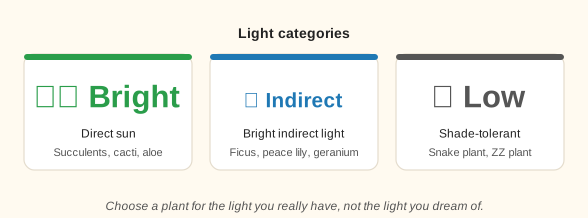
Lesson notes
The beginner's biggest mistake
A typical story of how a plant dies: someone falls in love with a beautiful plant in a store, brings it home and puts it “where it looks nice” — usually deep in the room, far from the window. But the plant needed bright light by the glass. Within a month it stretches out, turns pale and dies — and the culprit isn't a “black thumb” but a light mismatch.
The right order is the reverse: first, honestly assess how much light you have (window direction + the hand-shadow test), and only then choose a plant that will get enough of it. There's always a suitable shade-tolerant plant for a dark room — no need to torture a sun-loving one.
Artificial light is a workable option. An ordinary lamp “for looks” doesn't help, but a dedicated grow light (LED for plants) really can replace the sun, especially in winter and deep in the room.
Signs of too much and too little
A plant isn't silent — it sends clear signals. They're worth learning to read.
Too little light:
— Stretching (etiolation): long, thin stems, big gaps between leaves, the plant “reaches” toward the window.
— Paleness and smaller new leaves: new leaves are smaller and lighter than old ones; variegated varieties lose their pattern and the leaf turns plain green.
— Leaning toward the window and dropping lower leaves.
Too much light / sunburn:
— Dry, bleached patches, usually whitish-brown, on the side facing the sun.
— The leaf turns pale and fades; succulents turn red or “tan.”
— Wilting in the midday heat even when the soil is moist.
Sunburn and lack of light are easy to mistake for disease, but here's a clue: light problems are usually tied to position (the side facing the window, or the side in shade) rather than scattered randomly over the whole plant.