
← The Green Windowsill: Houseplants Without Casualties
Lesson
Lesson 1. Pots and drainage: water has to drain away
Understand why a drainage hole is a must, how to choose a pot's size and material, and when a drainage layer is (and isn't) needed.
Pot material: what you need to know
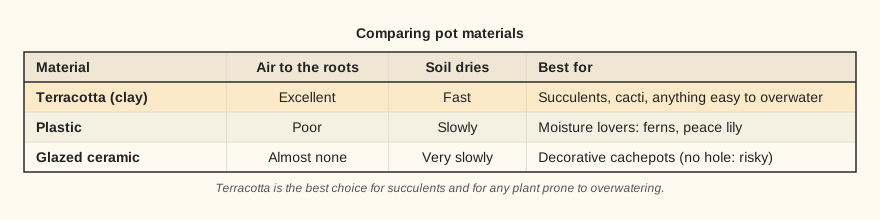
Comparing pot materials
The pot's material affects how fast the soil dries — and so the risk of overwatering.
Lesson notes
A drainage hole is a must
The most important feature of a pot is a hole in the bottom that lets excess water drain out. Without it, any watering, however careful, will sooner or later leave water standing at the bottom and cause root rot. If you're a beginner, buy only pots with drainage holes.
You can use a pretty cachepot (a decorative outer pot) with no hole — the pot-in-a-pot method — but follow the rule: the plant sits in a regular pot with holes, set inside the decorative cachepot. After watering, excess water drains into the cachepot — and you have to pour it off, not let it collect.
Pot size matters too. A common mistake is planting a small plant in a huge pot “to grow into.” In a large volume of soil around small roots, the water takes a long time to be used up and stagnates — again a risk of rot. The right choice is a pot just slightly bigger than the previous one: only about 2–3 cm (about an inch) wider in diameter.
Clay, plastic and the myth of clay pebbles at the bottom
The pot's material affects how moisture behaves:
— Unglazed clay (terracotta) “breathes” — the soil in it dries faster. A good choice for people who tend to overwater, and for succulents.
— Plastic and glazed ceramic hold moisture longer. Handy for moisture-loving plants and for people who forget to water.
There are many myths about a “drainage layer” of clay pebbles at the bottom. Modern research shows that a layer of stones at the bottom of a pot with a hole does NOT improve drainage — water still lingers in the soil above the gravel (that's how water behaves in a porous medium), and the roots lose usable space. Much more important are the drainage hole itself and a loose, free-draining mix.
When does a layer of clay pebbles make sense? If there's no hole at all (a cachepot), a thin layer at the bottom lifts the roots slightly away from the puddle — but that's a compromise, not real protection. A pot with a hole is more reliable.