
← Financial Modeling in Excel from Scratch
Lesson
Depreciation and working capital: the effect on cash
Explain how depreciation (a non-cash expense) and working capital (inventory, receivables, payables) affect profit and cash flow.
How depreciation and working capital items affect cash
Non-cash expenses and cash tied up on the balance sheet
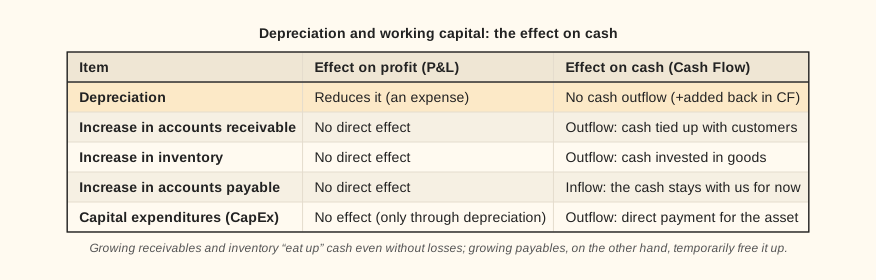
Depreciation reduces profit but not the cash in the bank — that's why it's added back under the indirect method of the Cash Flow statement.
Lesson notes
Depreciation and working capital
Depreciation spreads the cost of a long-term asset (equipment, vehicles, buildings) over its useful life. A machine bought for $1,200,000 and used for 10 years means $120,000 of depreciation a year. It reduces P&L profit, but the cash left at purchase, so it's a non-cash item: it lowers taxable income but takes no cash out in the current period. The indirect cash flow statement adds it back to net income.
Working capital is the resources “tied up” in the operating cycle: inventory, accounts receivable (customers owe you), and accounts payable (you owe suppliers). Growing inventory means cash spent before the expense hits the P&L; growing receivables mean revenue recognized but not yet collected. Growing payables, by contrast, are an interest-free “loan” from suppliers: unpaid, yet the expense is recognized, freeing up cash.
The change in working capital adjusts operating cash flow: increases in receivables or inventory are subtracted (cash left), increases in payables are added (cash stayed). Hence profit ≠ cash: a profitable company can run short of cash if it builds up inventory fast or gives customers long payment terms.
In a model, depreciation usually gets its own block (a “fixed asset schedule”), and the change in working capital comes from turnover (e.g., receivables = revenue / 365 × days sales outstanding). It all comes together in the cash flow statement.