
Understand that cooking protein foods means denaturing protein, and why overcooked food turns dry and tough.
What happens to protein when heated
Denaturation step by step
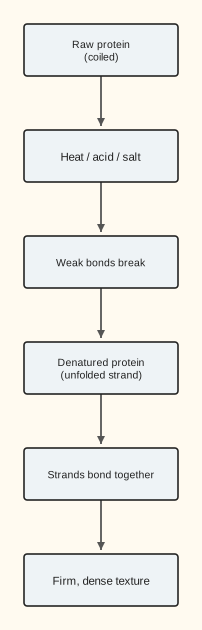
A protein is a long, twisted strand. Heat breaks the weak bonds that hold its shape, so the strand straightens out and then sticks to its neighbors — and the food firms up.
Lesson notes
Why a clear egg turns white
A raw egg is clear and runny; a cooked one is white and firm. There's no going back. This is protein denaturation.
Proteins are long molecules that, in nature, are folded into compact coils held together by weak bonds. Heat (and also acid or whipping) breaks these weak bonds: the coils unfold and then bond with each other into a single network. A liquid turns into a firm structure: the egg turns white, the meat becomes springy. That's what “cooked” means.
The key to juiciness is one word: “water.” Raw meat holds a lot of water between its proteins. When heat makes the proteins tighten too much, they squeeze that water out, like a wrung-out sponge. That's why overcooked meat is dry: the water is gone. Up to a certain temperature, meat stays juicy; above it, it loses moisture fast.
The main takeaway for home cooking: protein foods aren't ruined by “under” but by “over.” Slightly undercooking is almost always better than overcooking: the food finishes cooking on its own inside (heat keeps moving toward the center even after you take it off the heat). Cook to the right temperature, not “a bit longer just in case.”