
← A Day in Ancient Rome: Life Without the Emperors
Lesson
Lesson 3. The street: noise, crowds, and ads on the walls
Get a feel for the atmosphere of a Roman street — the crowds, the dirt, the nighttime rumble of carts, and the writing on the walls.
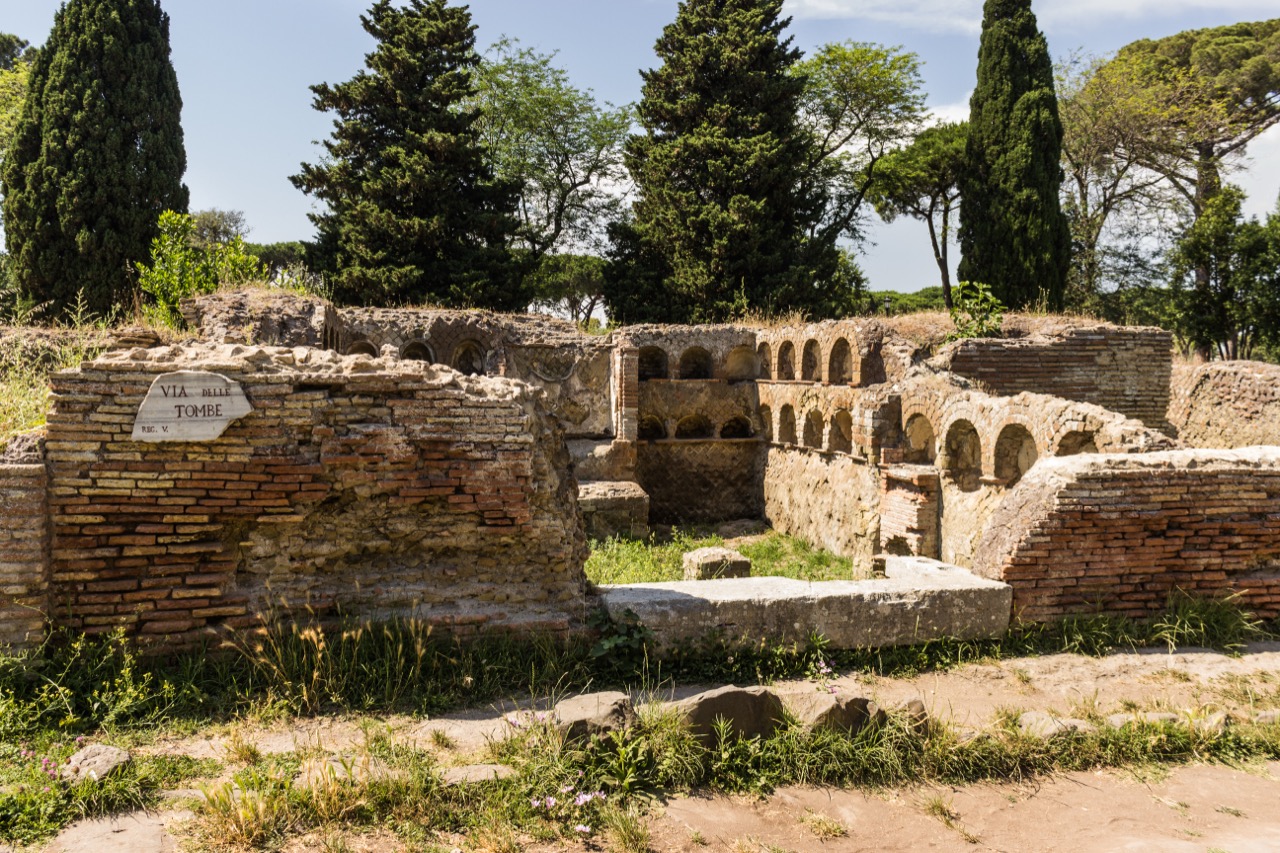
Streets of a Roman town (Ostia Antica)
What a residential block looked like
Brick high-rise insulae along the paved streets of the port of Ostia — a typical Roman town up close.
Lesson notes
Rumbling wheels and shouting traders
The Roman street was cramped, noisy, and dirty. The roadway was paved with stone, and tall, flat stepping stones were laid across it so that passersby could cross without stepping in mud and filth; cart wheels passed between them. Sewage, slops, and the contents of chamber pots were often tossed right into the street — which, by the way, could land you in court.
By day you could barely squeeze through the narrow streets: traders, porters, schoolchildren, craftsmen working right on the sidewalk. The poet Juvenal complained about the crush: let your attention slip, and you'd be knocked down by a litter or have your foot crushed by a soldier's boot.
And at night the rumbling began. Julius Caesar had banned freight wagons from entering the city by day — so all heavy loads were hauled at night, and sleeping through the clatter of wheels on stone was torture. Juvenal also wrote that in Rome only the rich can get a good night's sleep: insomnia is simply part of life here.
Ads, elections, and graffiti
The Romans had no newspapers or posters as we know them — but they had walls. People wrote all over them: the walls served as advertising, a bulletin board, and a social network all at once.
You can see this best in Pompeii, whose walls were preserved by the ash of Vesuvius in 79 CE. Thousands of inscriptions survive there. Election slogans were painted on: “So-and-so for aedile — he's a worthy man,” signed by whole support groups — bakers, mule drivers, even neighbors as a joke. Gladiator fights were announced: how many pairs would fight, whether there would be an awning against the sun. People praised the food in taverns and complained about the landlords.
Right next to them were graffiti scratched with a knife by ordinary people: declarations of love, witticisms, tallies of dice losses, complaints, and boasts. “So-and-so was here,” love notes, crude jokes — just like today, only on plaster. Thanks to these inscriptions, we hear the living voices of ordinary Romans.