
Apply the “remove the water, add heat” principle in practice and understand the role of salt, oil, and crowding in the pan.
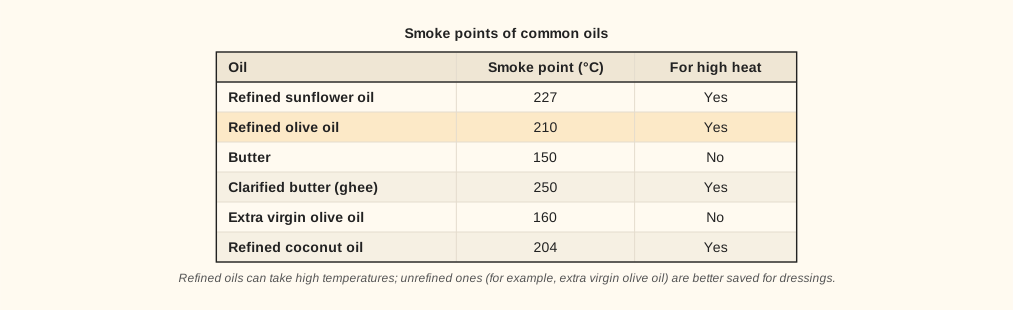
Smoke points of common oils
Which oil can take high heat
Don't overheat oil: above its smoke point it burns and gives off harmful substances. For a crust, choose an oil with a high smoke point.
Lesson notes
Why the pan “steams” instead of searing
The crust's main enemy is water. While the surface is wet, all the stove's energy goes into evaporating water, and the surface temperature stays around 100 °C. That's too low for Maillard, let alone caramelization.
Hence the practical rules. First: dry the food before cooking (pat it with a paper towel). Second: don't put too much in the pan at once. When there's too much food, it releases moisture, the pan's temperature drops, and everything starts to stew instead of browning. Cook in batches. Third: let the pan heat up properly first.
With salt, timing matters. Salt draws moisture out of meat (more on this in the protein unit). If you salt and sear right away, extra moisture appears on the surface and the crust suffers. So either salt in advance (40 minutes or more ahead — the moisture has time to go back in and the surface dries again) or right before cooking, patting it dry at once. “Just a little ahead” (5–15 minutes) is the worst option.
Oil helps heat pass more evenly to the food's surface and fills in the uneven spots, so contact with the heat is better. But every oil has its own smoke point — the temperature above which it starts to burn and turn bitter.