
Explain that DCF values a business based on its future free cash flows, and understand what makes up FCF at a basic level.
What makes up free cash flow (FCF)
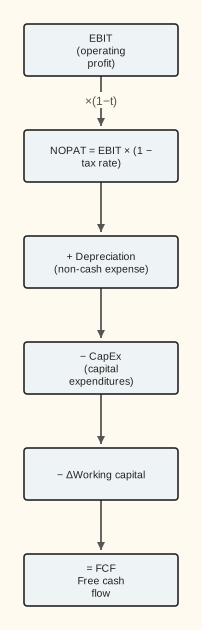
FCF = After-tax EBIT + Depreciation − CapEx − Change in working capital
DCF values a company through the present value of its future free cash flows — the cash the business generates for all investors.
Lesson notes
What DCF and free cash flow are
DCF (Discounted Cash Flow) is a way to value a business or an asset based not on the profit in its reports but on the actual cash it can generate in the future. The logic is simple: money today is worth more than the same money tomorrow, so future cash flows have to be brought back to today's value, that is, discounted.
The key thing you forecast is Free Cash Flow (FCF): the cash a company has left after paying all its operating expenses and investing in maintaining and growing the business (capital expenditures). Roughly speaking, FCF is what you can actually take out of the business or pay to investors without killing the business itself.
Why FCF and not profit? In Unit 2 we saw that profit is calculated on an accrual basis, while actual cash shows up in the cash flow statement. A company can report a profit and still have no cash (for example, because of receivables or heavy capital expenditures). DCF works with cash, not accounting numbers.
The forecast horizon is usually 5–10 years — long enough to cover the company's period of active growth. The forecast is built on the drivers from Unit 3: revenue growth, margins, and investment levels. Keep in mind: DCF is not a crystal ball. It's a structured way of reasoning about value, and its result always depends on the quality of the assumptions.