
← Kitchen Science: What Makes Food Delicious
Lesson
Lesson 2. Internal temperature: the kitchen's most important tool
Remember that doneness is determined by internal temperature, not time, and know the reference points for eggs and meat.
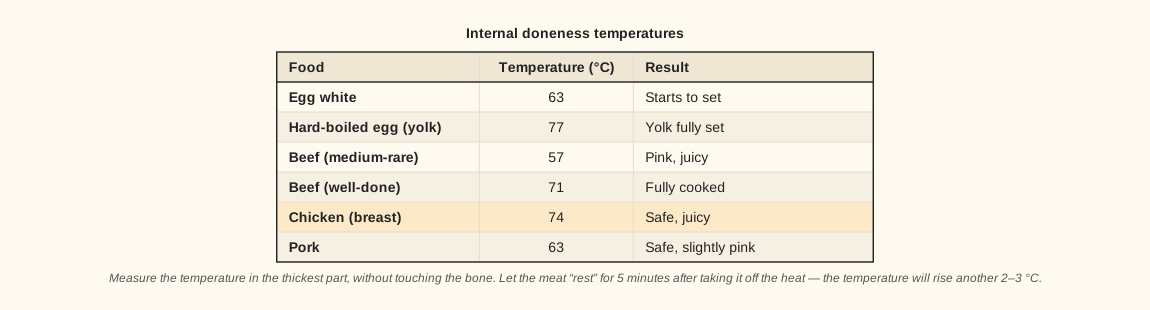
Internal doneness temperatures
The thermometer — the most important tool in the kitchen
Every protein food is done at a specific internal temperature, not after a set time. The same piece of meat cooks differently over different heat.
Lesson notes
Why a thermometer beats a timer
Different proteins set at different temperatures, and it's the temperature at the center of the piece that decides whether the food is done. Time is just a way to reach that temperature, and it depends on the thickness of the piece, the power of the stove, and the food's starting temperature. That's why a meat thermometer is more reliable than a timer.
The reference points for eggs show the logic well. Egg white starts to set at about 62–65 °C, while the yolk thickens at around 65–70 °C. That's why poached and soft-boiled eggs have a firm white and a runny yolk: the white sets before the yolk, and heat travels from the outside in — the egg comes out before its center heats up to 65–70 °C.
Internal temperature benchmarks for meat (this is general cooking logic; check official food-safety guidelines separately): a medium-rare beef steak is about 54–57 °C, while poultry is usually cooked higher (around 70–74 °C), because chicken has different safety requirements. Pork and ground meat are also cooked higher than a whole-cut steak.
One more technique: resting the meat after cooking. If you let a cooked piece sit for a few minutes, the heat spreads more evenly and the juices won't run out as much when you slice it. Cutting into a piping-hot steak right away means losing juices.