
← A Day in Ancient Rome: Life Without the Emperors
Lesson
Lesson 2. Household gods: the Lares and superstitions
Understand how religion lived in every home: the household gods (the Lares), the lararium, and everyday superstitions.
The lararium: a household shrine
The gods lived right in the house
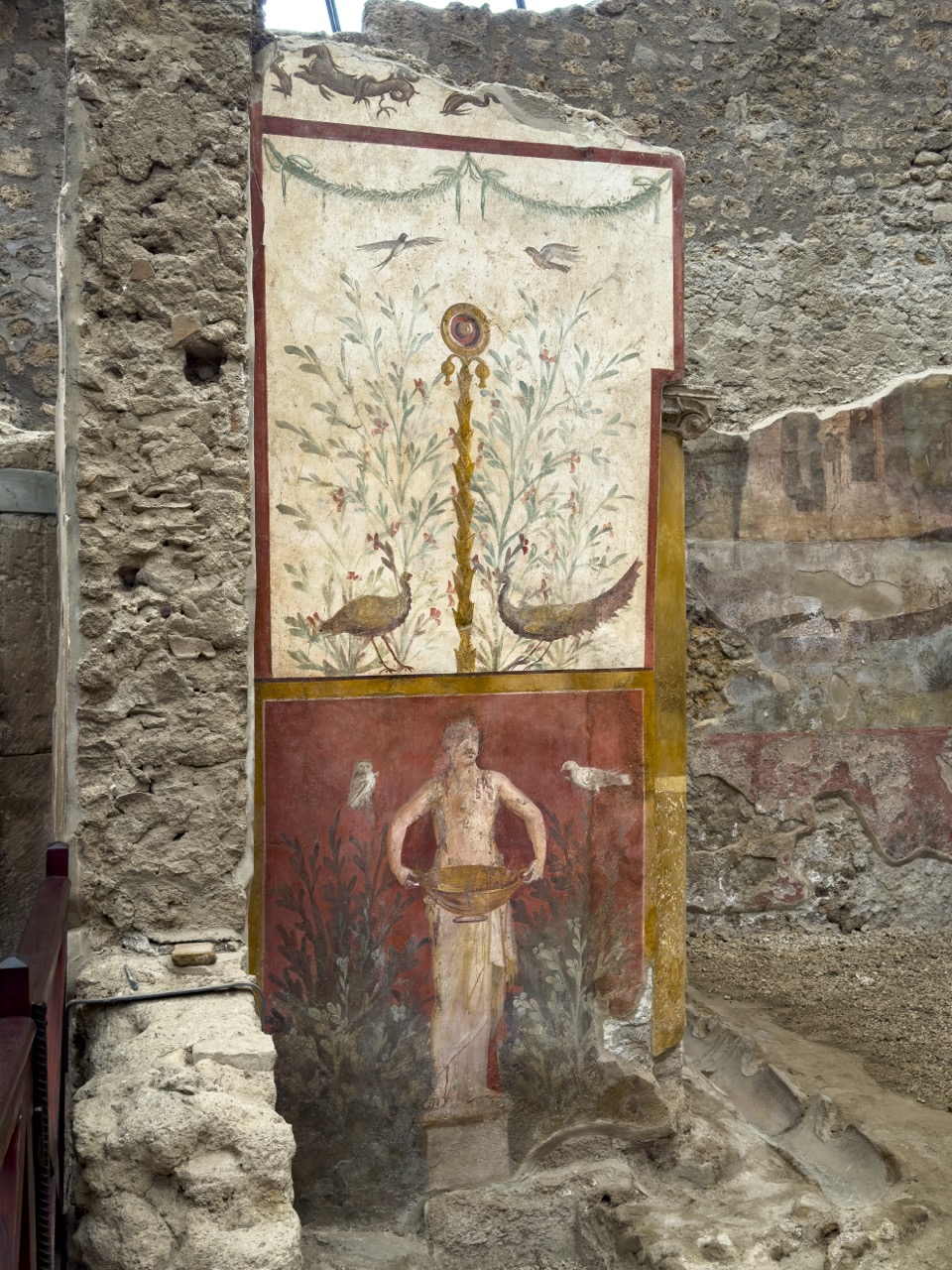
A lararium fresco in the garden of a Pompeian house: Romans honored the guardian gods of the home (the Lares and the Penates) every day.
Lesson notes
The Lares, the Penates, and the genius of the house
For a Roman, the gods were not somewhere far off in a temple but right at home, by the hearth. Every family honored its own household guardian deities. The Lares protected the home and family (a special Lar Familiaris watched over the whole line); the Penates guarded the stores and the pantry; and the genius was the guardian spirit of the head of the house himself and his line, his life force.
For these gods the house kept a small shrine — the lararium. It was often a niche in the wall or a small cupboard painted with frescoes: the genius in a toga, two dancing Lares with horns of plenty and bowls, and a serpent — the good guardian spirit of the place. Statuettes of the gods were placed here, and simple offerings were brought.
The rites were domestic and daily: before a meal, a bit of food was thrown into the hearth fire; on holidays the lararium was decorated with garlands; the gods were given a share of wine and flatbread. On important occasions — a wedding, a birth, a journey — people especially asked the Lares and the genius for protection. Religion was woven into everyday life itself.
Roman superstitions
The Romans were very superstitious, and omens followed them everywhere. They tried not to start important business on “unlucky” days; before a serious step they sought signs — for example, by watching the flight of birds (the job of priests called augurs) or by examining the entrails of sacrificed animals.
Against the evil eye and dark forces they protected themselves with amulets. Children wore a special locket, the bulla, around their necks to guard them against the evil eye. Against envy and curses there was the phallic symbol (the fascinus): it was carved on walls and houses and worn as a charm — for a Roman it was not something shameful but protection and a wish for good luck. An image of an eye attacked from all sides also warded off envy.
The left side was often considered a bad omen, and sneezes and chance words were read as signs. All this coexisted with official religion: peasants and senators alike took omens seriously before acting.