
← The Green Windowsill: Houseplants Without Casualties
Lesson
Lesson 2. When and how much to water, really
Master watering “by the soil, not by the schedule”: check moisture with your finger, water thoroughly and pour off the excess.
The pre-watering check
Three steps to watering right
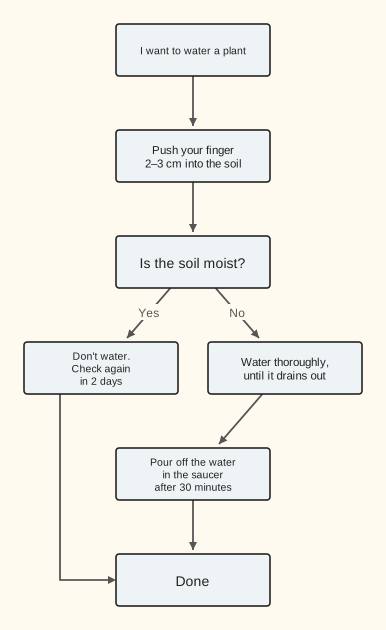
A watering schedule is a trap. Every time before you water, go through this simple algorithm.
Lesson notes
The key watering skill
Forget advice like “water once a week on Wednesdays.” How much water a plant needs depends on a dozen things: light, temperature, pot size, season, humidity. In a cool room in winter a plant drinks several times less than in summer heat. A rigid schedule inevitably leads to either overwatering or drought.
The right guide is the state of the soil. The most reliable method, and a free one, is the finger test. Push your finger 2–3 cm (about one knuckle, roughly an inch) into the soil. If the soil is moist and sticks, it's too early to water. If it's dry and crumbly, it's time. For most houseplants it's normal for the top layer of soil to dry out between waterings.
There are other ways to judge moisture: the weight of the pot (a dry one is noticeably lighter) or a moisture meter (but treat it with caution — cheap ones are often wrong). Still, your finger is the most reliable and always with you.
Deeply but infrequently — and always pour off the excess
When watering really is needed, do it right. It's better to water deeply but infrequently than often and a little at a time.
— Pour water over the whole surface of the soil until it runs out of the drainage holes at the bottom. That way the whole root ball gets wet, not just the top, and salts are flushed downward.
— After 15–30 minutes, ALWAYS pour off the water that has collected in the saucer or cachepot. A plant standing in a puddle is on a direct path to root rot. This is the rule beginners break most often.
— Frequent small waterings are bad: the top stays constantly damp (a risk of rot and fungus gnats), while the bottom of the root ball can stay dry.
About the water: ordinary tap water left to stand, at room temperature, is fine. Cold water straight from the faucet is a shock to the roots. Letting it stand (a few hours) lets some of the chlorine escape; for most plants that's enough.
Common watering mistakes
A few bad habits worth breaking:
— Watering “a little every day.” It seems caring, but it keeps the top of the soil forever wet and never soaks the root ball. Better to water less often but thoroughly.
— Water in the saucer “just in case.” The plant won't “drink it up later” without harm — the roots will just sit in water and suffocate. Pour it off.
— Watering over the leaves / judging “by eye from above.” A dry crust on top doesn't mean it's dry inside, and vice versa. Check deeper with your finger.
— Misting instead of watering. Misting slightly raises the humidity but does NOT replace watering the soil: that water never reaches the roots.
— One routine for every plant. A succulent and a fern on the same windowsill are watered differently. Group plants by their needs.