
Learn what Romans really ate day to day and bust the myth of daily feasts of exotic food.
What an ordinary Roman's table held
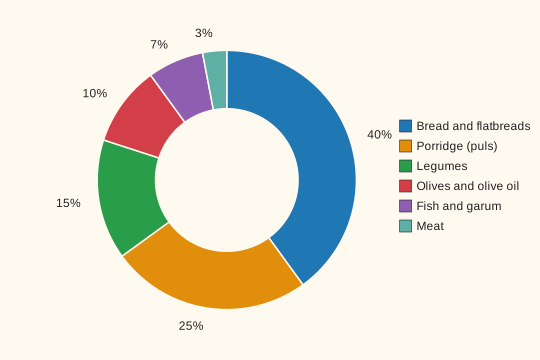
The everyday diet: the share of staple foods
Most city dwellers ate a simple, monotonous diet — grains and legumes played the leading role.
Lesson notes
Everyday meals, not orgies
The biggest myth about Roman food is that they all gorged every day on peacocks, flamingos, and nightingales' tongues while reclining on couches. In fact, only a tiny elite of the rich feasted like that, and even then only on special occasions. An ordinary Roman's everyday food was simple and modest.
Grain was the foundation of every meal. At first the most common dish was puls: a thick, polenta-like porridge of emmer wheat or other grains. Later, bread pushed it aside more and more. With the porridge or bread came whatever was at hand: olives and olive oil, legumes (lentils, peas, fava beans), onions, garlic, cabbage, a little cheese. That is what the Latin word behind our word “companion” meant: the one you share bread with.
For the poor, meat was a rare treat — usually pork, sometimes cheap fish. But fruit was everywhere (grapes, figs, apples), and so was wine, usually mixed with water. Sugar was unknown — sweetness came from honey and grape syrup.