
← The Green Windowsill: Houseplants Without Casualties
Lesson
Lesson 2. Potting mix and stress-free repotting
Understand why a plant needs a loose potting mix, when and how to repot, and which techniques reduce repotting stress.
Types of potting mix and what they're for
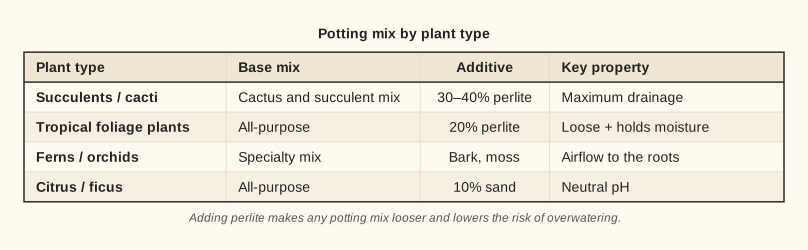
Which potting mix does your plant need?
All-purpose potting mix isn't all-purpose. Different plants have fundamentally different needs when it comes to what's in the mix.
Lesson notes
Potting mix is both support and air
Potting mix holds the plant up and stores water and nutrients, but just as important, it lets air reach the roots. Dense soil that compacts (for example, plain garden soil dug up and put in a pot) holds water and deprives the roots of air — again, the road to rot.
Good houseplant mix is loose and free-draining. That's why soil amendments are added to loosen it: perlite (light white granules), vermiculite, coco coir, fine bark. They create pores that let air in and excess water out.
Different plants, different mixes. All-purpose potting mix for houseplants suits most of them. But succulents and cacti need a special, very “lean” and loose mix with a large share of sand or perlite, or they'll rot. You can buy it ready-made (“cactus and succulent mix”). Store-bought mix is easier and safer for a beginner than soil from outdoors (it can carry pests and fungi).
Signs it's time for a new pot
Repotting isn't done “as prevention, on a schedule” — it's done when the plant has become cramped or unwell. Signs:
— Roots are coming out of the drainage holes or showing on the surface of the soil.
— The plant is “bursting” out of its pot, is top-heavy, and the soil barely holds water (all the water runs straight through — the roots have crowded out the soil).
— Growth has stopped, even though there's enough light and care.
— 1–2 years have passed, and the potting mix is exhausted and has compacted.
The best time is spring and early summer: the plant is actively growing and recovers quickly. In fall and winter it's better not to repot unless you really have to: the plant is dormant, and the roots establish slowly.
An important point: don't repot a newly bought flowering plant right away “to get it out of that bad store pot.” Give it 1–2 weeks to get used to your home; repotting while it's blooming is extra stress.
How to repot gently
The goal is to change the pot and refresh the potting mix while disturbing the roots as little as possible.
1. Get a new pot ready (2–3 cm bigger, with a hole) and fresh potting mix.
2. Carefully remove the plant: turn the pot upside down while supporting the base, and gently squeeze the sides of the pot. Don't yank it by the stem.
3. Inspect the roots. Healthy ones are light-colored and firm. Cut rotting ones (dark, soft, smelly) back to healthy tissue with sharp, clean scissors.
4. There's no need to fully “wash off” and break up the root ball of a healthy plant — that's extra stress. Gently straighten out roots circling the pot.
5. Put a little potting mix in the bottom, set the plant at the same depth as before (don't bury the stem deeper), fill in mix around the sides and firm it lightly.
6. Water. After repotting, a plant may “sulk” for a couple of weeks — that's normal; keep it out of bright sun and don't overwater.