
← A Day in Ancient Rome: Life Without the Emperors
Lesson
Lesson 3. The games: races and the arena through a spectator's eyes
Understand what chariot races and gladiator fights meant to the spectator, and separate fact from myth about the arena.
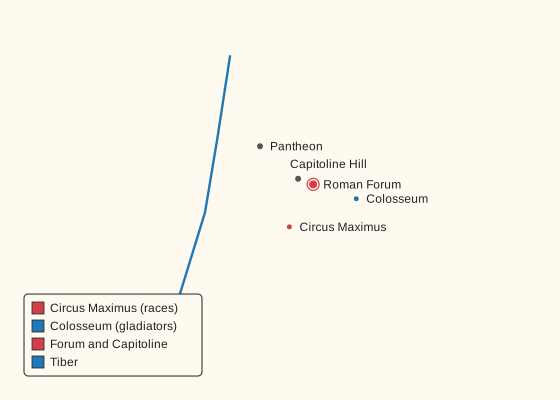
The Circus Maximus and the Colosseum on a map of Rome
Where the great spectacles took place
The two main venues for spectacles — the Circus Maximus and the Colosseum — lay in the center of Rome.
Lesson notes
Chariot races and fan “factions”
Ask which spectacle the Romans loved most, and the answer may surprise you: not gladiators but chariot races. They were held in the enormous Circus Maximus, which seated hundreds of thousands of spectators — Rome's biggest “arena” of all.
The chariots (usually drawn by a four-horse team, a quadriga) ran seven laps around a long track, making sharp turns at the turning posts (metae). It was dangerous: chariots collided and overturned, and charioteers died. The best charioteers became superstars whose names the whole city knew, and the most successful earned whole fortunes.
Spectators rooted for teams, or “factions,” told apart by their colors: the Blues, the Greens, the Reds, and the Whites. Fans were as loyal to their color as die-hard fans of a sports team — they argued, fought, and bet money. Belonging to a “faction” could matter more than the gap between rich and poor: the Greens were cheered on by beggars and sometimes by the emperor himself.
How the arena differed from the movies
Gladiator fights are the best-known Roman spectacle, but many myths surround them.
Myth one: every fight was to the death. In reality gladiators were expensive (they were trained in special gladiatorial schools), and killing them in every fight made no sense for their owner. Many fights ended when the loser surrendered, and his fate was decided by the rules; death was by no means required, though it did happen.
Myth two: the “thumbs down” gesture meant “finish him off.” Historians argue about what the gestures of the crowd and the organizer of the games really meant; the famous “thumbs down” is largely an image from 19th-century painting, not a proven fact.
Myth three: all gladiators were slaves condemned to die. Many really were slaves or prisoners of war, but there were also free volunteers who entered the arena for glory and money. The best fighters became celebrities: people painted them on walls, admired them, and fell in love with them. And what mattered most to the spectator was the skill and showmanship of the fight.