
Complete the picture of the day: the afternoon baths, the main dinner, the evening, and the city at night.
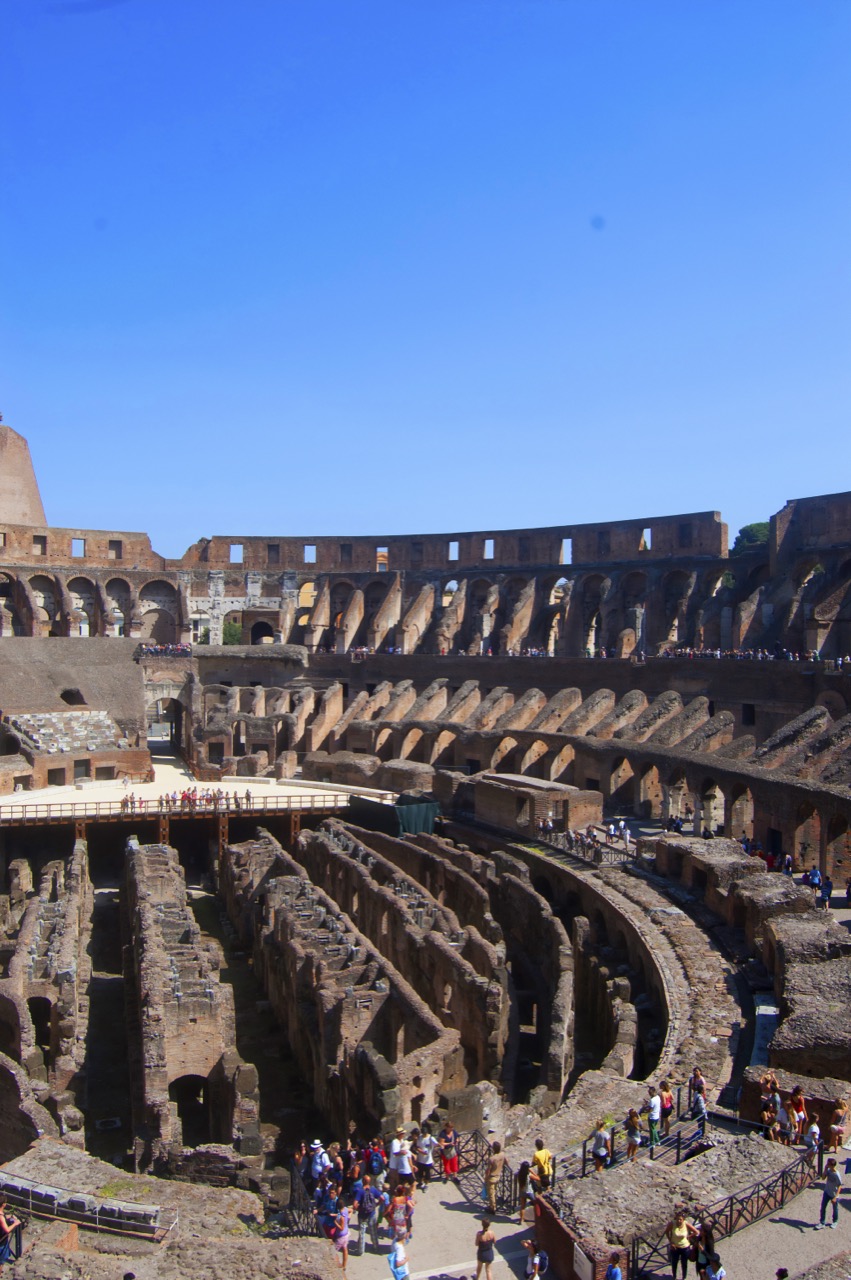
The arena of the Colosseum
Spectacles in the afternoon
Inside the Colosseum: beneath the arena you can see the corridors of the hypogeum — service areas where animals and stage sets were kept.
Lesson notes
The baths, dinner, and a restless night
The workday ended long before sunset. After noon came time for yourself. First, a light snack (the prandium) in the middle of the day, on the go or at a thermopolium. Then, toward evening, the main pleasure — a trip to the baths: to wash, stretch, socialize, and catch up on the news. The baths marked the boundary between work and rest.
The main event of the day was dinner — the cena, in the early evening. For the poor it was modest (porridge, bread, vegetables); for the rich, a long banquet in the triclinium with several courses, wine, and conversation. This was time for family and friends.
When darkness fell, the city sank into gloom: there was almost no street lighting, and respectable people tried to stay at home. People walked the streets with torches and slave bodyguards: the night was dangerous — robbers, drunken gangs. Yet it was precisely at night that freight wagons, banned from entering by day, rumbled over the paving stones. So the circle closed: the Roman fell asleep to the very noise with which we began the story of his city.
What we've learned about the Romans
We've followed an ordinary Roman through a day from dawn to night — and seen that behind the columns and legions lay a living everyday world, much of it familiar to us too.
He woke in a cramped rented insula or a roomy domus with a peristyle, ate simply — puls, bread, olives, all with garum — and only rarely feasted in a triclinium. Lunch came from a thermopolium. At the baths he used a strigil and met half the city. He cheered the Greens or Blues, argued about gladiators, lived by a craft, counted sesterces; beside him, slaves dreamed of manumission. He honored the paterfamilias and the matron, fed the Lares at the lararium, wore a charm against the evil eye.
The main lesson of the course: history isn't just dates and emperors. It's the smell of bread from a taberna, the rumble of carts at night, a joke scratched on a wall, and a piece of flatbread tossed into the fire for a household god. It's in this everyday life that ancient Rome truly comes alive.