
Apply the multiplication rule and check whether events are independent using P(A and B)=P(A)·P(B).
Probabilities when tossing two coins
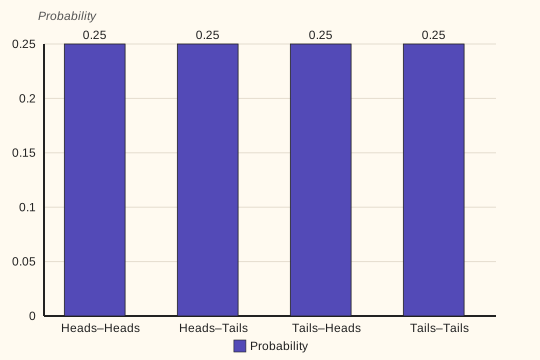
Outcomes of two independent tosses
For two independent coins, each of the four outcomes is equally likely: P = 0.25. This demonstrates the multiplication rule P(A and B) = P(A) · P(B).
Lesson notes
The multiplication rule and independent events
When we want to know whether both events A and B happen, we use the multiplication rule. For independent events: P(A and B) = P(A) · P(B). Events are called independent if the occurrence of one doesn't affect the probability of the other.
An example with two coins: toss a coin twice. P(heads on the first toss) = 1/2, P(heads on the second toss) = 1/2. The tosses don't affect each other — they're independent. So P(two heads) = 1/2 · 1/2 = 1/4.
When events are dependent, the probability of the intersection is calculated differently — using conditional probability. A classic example: drawing cards from a deck without replacement. The probability that the first card is an ace is 4/52. If an ace has already been drawn, the probability of a second ace is 3/51 (the deck got smaller). These events are dependent. If the card is put back in the deck after each draw, the events are independent again and the probabilities don't change.
The test for independence: events A and B are independent if and only if P(A and B) = P(A) · P(B). If this equality doesn't hold, the events are dependent.