
← A Day in Ancient Rome: Life Without the Emperors
Lesson
Lesson 1. Where Romans lived: the insula and the domus
Understand how the housing of poor and rich city dwellers differed: multistory insulae and private houses like the domus.
Insula and domus: two worlds in one city
Where the poor and the rich lived
Rome had two kinds of housing, which stood literally a stone's throw from each other.
Lesson notes
Two Romes under one roof
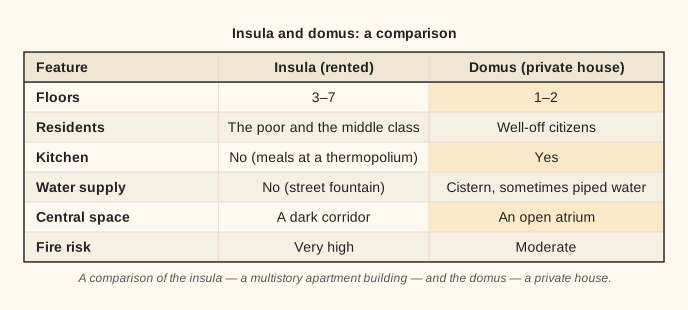
Picture ancient Rome, and white columns and the Forum spring to mind. But an ordinary city dweller rarely owned a home. Most of the capital's population — about a million people by the start of the Common Era — rented a place to live in multistory apartment buildings. Such a building was called an insula (literally “island”: a city block surrounded by streets on all sides).
The insula was the Roman “high-rise.” Down at street level there were usually shops and workshops (tabernae), and above them rented apartments. The higher the floor, the cheaper and worse it was: the poor crowded into the upper stories, in cramped rooms with no water and no kitchen. Under a law of Augustus, buildings were limited to about 20 meters (65 feet) — later Trajan set about 18 meters (60 feet) — because they were built in haste and often collapsed or burned.
The rich lived differently — in a private house of their own, one story high (more rarely two), called a domus. It was a spacious house turned inward: blank walls faced the street, while inside there were light courts, a garden, and rooms around them. Outside the city, well-off families had villas — country estates with land.