
Understand how ordinary city dwellers earned a living and how trade and the advertising of goods worked.
What Rome's city dwellers did for a living
The city's occupations
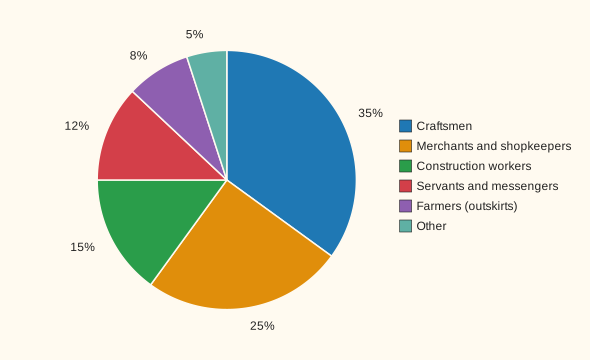
Rome was a city of crafts: most free city dwellers worked with their hands in small workshops.
Lesson notes
How an ordinary city dweller made a living
Rome lived by the labor of countless craftsmen and merchants. The street-level floors of the insulae were taken up by tabernae — shops and workshops open right onto the street. Baker, blacksmith, shoemaker, cloth dyer, potter, carpenter, barber, wine seller — streets were divided by trade, and whole neighborhoods smelled of fresh bread or of leather.
Craftsmen banded together in collegia — something like guilds or labor unions: for bakers, carpenters, porters. A collegium helped its members, held shared festivals and decent funerals, and kept a patron from the nobility. It was an important part of an ordinary person's life in the city.
Big trade was a world of its own. By sea, Rome received grain from Egypt and Africa, wine and oil in amphorae, marble, slaves, and wild animals for the arena. Ships unloaded at the port of Ostia, and from there the goods were carried up the Tiber. A merchant who brought his cargo through safely could get rich; but the risk was great too — a storm or pirates could ruin him.