
← A Day in Ancient Rome: Life Without the Emperors
Lesson
Lesson 1. The family: the father, women, and children
Understand how the Roman family worked: the father's power, the real role of women, and the lives of children.
The Roman familia: members and hierarchy
Who belonged to a “family” the Roman way
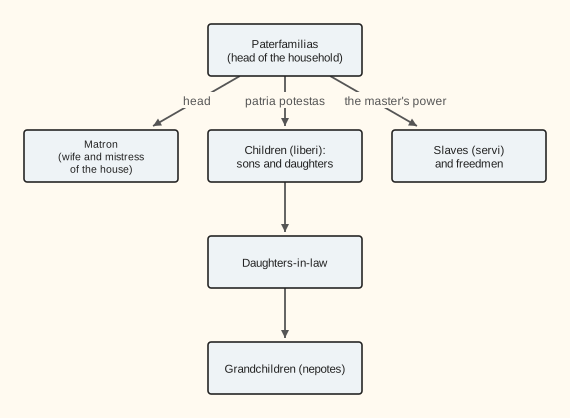
The Roman “familia” was a legal concept: it included not only blood relatives but also slaves.
Lesson notes
Who was in charge of the household
The Roman family (the familia) was not just parents and children but the whole household, including slaves and property. At its head stood the eldest man — the paterfamilias, the “father of the family.” Under ancient law his power was enormous: he controlled the property, approved marriages, and formally held power even over the lives of household members. In practice, by the start of the Common Era this power had greatly softened and rested more on authority than on fear.
The mistress of the house — the matron (matrona) — was not the powerless recluse she is sometimes imagined to be. She ran the household, managed the servants, influenced her husband's affairs, and could own and inherit property. Roman women visited friends, went to temples and to the games, and engaged in trade. They were respected as guardians of the home, and noble matrons had considerable influence.
Until they came of age, children were under their father's power. As a sign of growing up, a boy solemnly exchanged the purple-bordered toga of childhood for the plain white toga of a grown man. Girls were married off young. Family and carrying on the line were considered matters of the highest importance.