
Understand how salt works on meat (it draws out moisture, then helps hold it in) and what dry and wet brining are.
How salt works on meat: two stages
Osmosis and salting — why timing matters
Salt acts on meat in two opposite stages. Salt it and sear right away, and you'll lose juices. Give it time, and salt will help keep them in.
Lesson notes
Why salt ahead of time
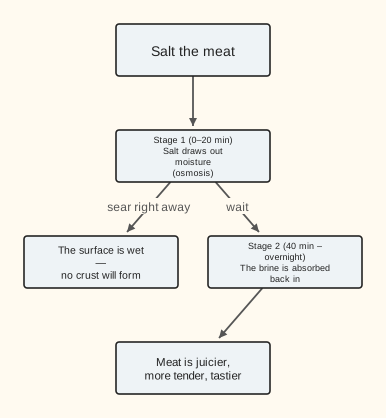
Salt has a double role, and it depends on time. In the first minutes, salt draws moisture out of the meat's surface (osmosis — water moves toward where there's more salt). If you salt and sear right away, that surface moisture gets in the way of the crust, and the salt hasn't yet done any useful work.
But if the meat stays salted longer, the second stage begins. Salt gradually works its way inside and changes the proteins so that they hold on to water better during cooking. As a result, meat salted in advance comes out juicier and evenly seasoned inside, not just on the surface.
Hence two working techniques. Dry brining: sprinkle the meat with salt and leave it (from 40 minutes to several hours, longer for big cuts, even overnight in the fridge). The moisture first comes out, then goes back in with the salt dissolved in it, and the surface dries again — so you get both a crust and a juicy inside. Wet brining (a brine): keep the food in salted water. It's especially helpful with things that dry out easily, like chicken breast or turkey.
The principle: salt isn't just flavor but a tool for managing moisture. “Salt ahead” and “salt five minutes before” give different results, and now you know why.