
← A Day in Ancient Rome: Life Without the Emperors
Lesson
Lesson 2. Street food: thermopolia and garum
Understand how and where city dwellers without a kitchen ate, and meet the Romans' favorite sauce, garum.
The thermopolium — ancient Roman fast food
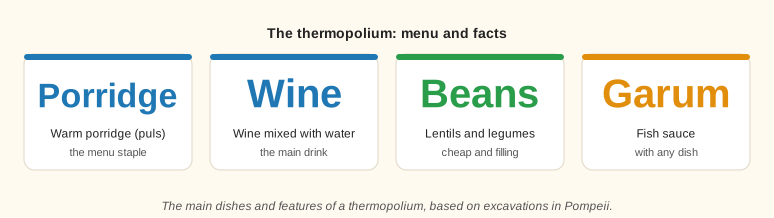
What a thermopolium sold
Thermopolia stood on every corner of a Roman town — places serving hot food straight from the counter.
Lesson notes
The thermopolium — a snack bar on the corner
Most city dwellers had no kitchen in their rented apartments: lighting an open fire on the upper floors of wooden insulae was too dangerous. So Romans ate out on a mass scale — at street-food bars called thermopolia (from the Greek for “I sell hot food”).
A thermopolium is easy to recognize: a shop open to the street, with an L-shaped stone counter. Large clay jars, dolia, were set into the counter. For a long time they were thought to hold ready-cooked hot food, as in a modern cafeteria line; historians are now more cautious: some dolia may also have stored dry goods — grain, nuts, beans. Either way, this was where you could quickly grab a bite and a drink of wine.
About 150 such places have been found in Pompeii. In one of them (the thermopolium of Vetutius Placidus), archaeologists even found coins hidden in one of the counter's jars and a painted household shrine on the wall. This was real ancient Roman fast food for ordinary people.
Garum: Rome's fish “ketchup”
The most Roman seasoning of all was garum — a salted fish sauce. It was made like this: fish (and fish guts) were layered with salt and left to ferment in the sun for weeks. The resulting liquid was drained off — that was garum: clear, pungent, very salty, and rich in umami.
It sounds unappetizing, but garum went into almost everything: meat, fish, vegetables, even sweet dishes — much as we pour on soy sauce or Asian fish sauce (and it really is a close relative of the fish sauce). Garum was sold in amphorae all over the empire; there was cheap fish sauce for the poor and an expensive, “vintage” kind for the rich.
Making garum was a whole industry: on the coasts of Spain and North Africa stood factories with stone vats for salting. The smell was so strong that these plants were set well away from residential neighborhoods.