
Understand that a brown crust and the aroma of browning are chemistry (the Maillard reaction), and under what conditions it starts.
The temperature threshold of the Maillard reaction
At what temperature a crust starts to form
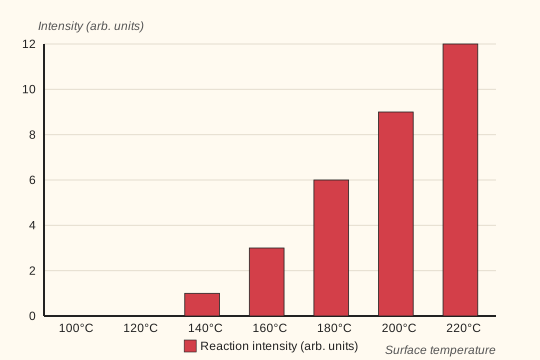
The Maillard reaction starts at 140–150 °C and speeds up as the temperature rises. Below this threshold, the surface simply cooks in its own steam.
Lesson notes
Why seared food tastes better than boiled
Compare a boiled chicken breast with a seared one. Their makeup is almost the same, but the taste and smell are worlds apart. The difference comes from the Maillard reaction.
The Maillard reaction is a reaction between amino acids (the “building blocks” of protein) and sugars that happens under heat. Two groups of nearly flavorless substances give rise to hundreds of new molecules: they create the brown color and that familiar smell of a seared crust, toast, cracklings, and coffee. It was discovered by the French chemist Louis Camille Maillard in 1912. That's why it's called the Maillard reaction, after him.
The main thing to remember at home: this reaction only gets going noticeably at high temperature and on a dry surface. The benchmark is roughly 140–150 °C and up. As long as there is free water on the food, its surface won't heat above 100 °C (the water boils and cools it), and there will be no crust. That's why boiled and steamed foods stay pale, while seared and roasted ones turn golden-brown.
The takeaway: if you want the flavor of browning, remove the water from the surface and give it heat. Wet food in a pan first “boils” in its own juices, and real searing begins only once the juices have cooked off.