
Bring all of the course's mechanisms together into one system and learn to apply them to new, unfamiliar situations in the kitchen.
Seven principles of kitchen chemistry
Everything a cook who thinks like a scientist needs to know
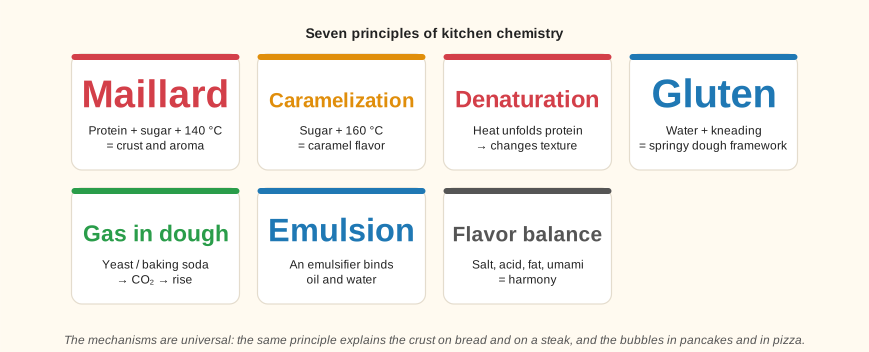
The whole course boils down to seven mechanisms. Know them, and you'll be able to understand and fix almost any cooking situation.
Lesson notes
Seven principles of kitchen science
You've made it to the end. Here are the essentials in seven principles — that's “thinking like a kitchen scientist.”
1. The flavor of browning is the Maillard reaction (sugars + amino acids, high heat, dry surface, from about 140–150 °C). No dryness and heat, no crust.
2. Caramelization is the breakdown of sugar alone (from about 160–170 °C). A narrow window between “done” and “bitter,” so take it off a little early.
3. Cooking meat and eggs is protein denaturation. “Over” dries it out (proteins squeeze out water), so cook to a temperature, not to death, and let it rest.
4. Salt is a tool for moisture and flavor: it draws water out and then holds it, enhances flavors, tones down bitterness. When you salt matters.
5. Gas raises baked goods, and a structure holds them up: yeast (alive, hates heat), baking soda (needs acid), baking powder (acid already built in); gluten is that structure: develop it for bread, spare it for tender baked goods.
6. Four knobs tune flavor: salt, acid, fat, umami. Almost any “doesn't taste good” is about balance.
7. An emulsion binds oil and water with an emulsifier (yolk, mustard) and mechanical work; haste breaks it, patience brings it together.
The main meta-principle: a failure is a symptom of a mechanism, not bad luck. Ask yourself, “What physically went wrong?” — and you'll almost always find what to fix.