
Be able to identify, from the symptom, the cause of common failures with meat, eggs, and crust, and connect it to its mechanism.
Diagnosing kitchen mistakes
Symptom → cause → fix
Cooking failures are almost always tied to one of the course's mechanisms. Just as a doctor diagnoses by symptoms, a cook looks for the cause through the mechanism.
Lesson notes
From symptom to cause
The main idea of the whole course: a failure is a symptom, and a symptom has a cause, a mechanism. If you fix the cause instead of changing the recipe at random, your results become consistent. Let's go through the common “ailments” of heat and protein.
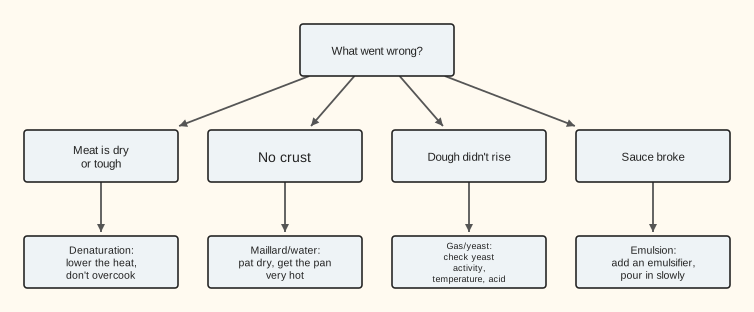
Rubbery omelet / rubbery fried eggs. Cause: overheating and overcooking — the egg proteins denatured and tightened too much, squeezing out water. Fix: lower heat, take it off the stove a little early (it finishes cooking on its own), don't dry it out.
Dry, tough meat. The same denaturation, taken to the extreme: the proteins have squeezed out the moisture. Fix: cook to the right internal temperature (use a thermometer), not “a bit longer just in case”; salt ahead or use a brine; let the meat rest.
No crust, the food “stews.” Cause: water and a low surface temperature, so the Maillard reaction doesn't start. Fix: pat the food dry, preheat the pan, don't crowd the pan, cook in batches.
Bitter, burnt caramel/crust. Cause: you passed the temperature threshold, and breakdown into bitter compounds began. Fix: less heat, take it off a little early, don't walk away from the stove.
A rule to remember: with protein, “under” is easy to fix (cook it a little longer), “over” is almost impossible to fix (you can't put the water back). So with protein it's always better to slightly undercook.