
← A Day in Ancient Rome: Life Without the Emperors
Lesson
Lesson 1. The public baths: a social network
Understand what the public baths (thermae) meant to a Roman: not just a place to wash, but a center of socializing and leisure.
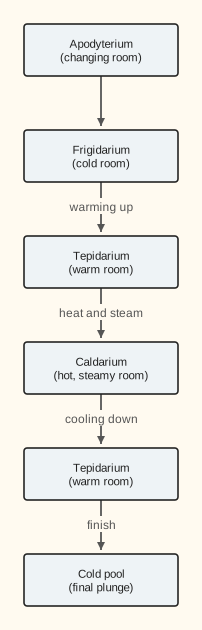
A visitor's route through the rooms of the baths
From the changing room to the cold pool
A visit to the baths was a ritual: each room had its own purpose and temperature.
Lesson notes
The baths — club, gym, and bathhouse in one
Going to the baths was a daily ritual for a Roman and the main place to socialize. Almost everyone went to the public baths (thermae): entry cost next to nothing, and sometimes it was even free, paid for by a wealthy patron. Both the pauper and the senator came here.
The baths were a whole complex. First came the changing room (apodyterium). Then you warmed up in the warm room (tepidarium), moved on to the hot room with a pool and a steam room (caldarium), and finished in the bracing cold pool (frigidarium). The water and floors were heated by hot air that flowed under the floor and through the walls — the hypocaust system.
But washing was only part of it. The baths had exercise yards (palaestrae), ball courts, sometimes libraries, gardens, and food stalls. People closed deals, gossiped, looked for patrons, and arranged to meet here. In essence, the baths were the city's “social network” — a place where public life was in full swing.