
Tell caramelization (the breakdown of sugar) apart from the Maillard reaction and understand why sweet things burn so easily.
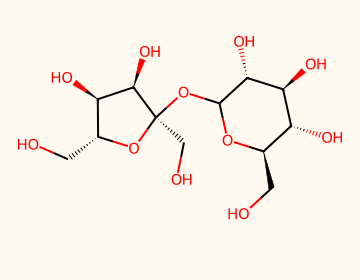
The sucrose molecule
What ordinary sugar is made of
Sucrose is a molecule in which glucose and fructose are joined together. Heated above 160 °C, it breaks down and forms hundreds of new compounds with a caramel aroma.
Lesson notes
When sugar itself turns brown
Caramelization is the breakdown of sugar molecules by heat, with no protein involved. That's its main difference from the Maillard reaction: Maillard needs both sugar and amino acids, while caramelization needs only sugar.
As sugar heats up, its molecules break apart and recombine into new substances: nutty, toasty flavors appear, along with a slight bitterness and a brown color. Ordinary table sugar (sucrose) starts to caramelize noticeably at about 160–170 °C. That's higher than the Maillard threshold, so pure sugar needs more heat.
The main problem with caramel at home is the narrow window between “done” and “burnt.” Sugar moves from light golden to amber, then to dark brown, and after that to black and bitter. These changes happen fast and speed themselves up, so it's easy to overshoot.
A burnt taste isn't “over-caramelization” — it's sugar already breaking down into bitter, scorched compounds (all the way to carbon). The rule at home: take caramel off the heat a little earlier than seems right, because it will finish in the hot pan on its own. Light caramel has a mild, creamy flavor; dark caramel is rich, with a bitter edge; black caramel is ruined.