
← The Green Windowsill: Houseplants Without Casualties
Lesson
Lesson 1. Yellow leaves, rot and the logic of diagnosis
Learn to tell whether yellowing comes from overwatering, drought, lack of light or natural aging, and make a diagnosis from all the signs together.
Differential diagnosis: yellow leaves
One symptom — different causes
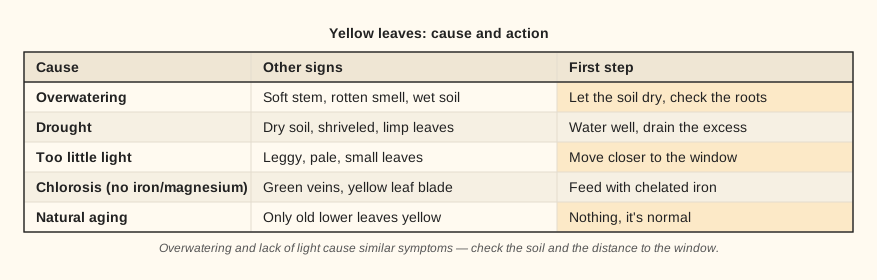
Yellow leaves are the most common warning sign. But the causes can be completely different: look at the accompanying signs.
Lesson notes
One symptom — many causes
“My leaves are turning yellow” is the most common complaint — and the most useless without details. Yellowing is like a fever in a person: a symptom of a dozen different problems. To make a diagnosis, you look at WHICH leaves, HOW they yellow, and what's going on around them.
The main yellowing scenarios:
— Overwatering (most often). The lower leaves turn yellow; the leaf is soft and limp; the soil is constantly wet; there may be dark spots and a bad smell from the soil. This is the most common case.
— Drought. The leaf turns yellow or brown but is dry and crispy; the soil is bone-dry and has pulled away from the sides of the pot; the plant droops.
— Lack of light. Leaves farther from the window turn pale and yellow; the plant is leggy.
— Natural aging. One or two of the lowest, oldest leaves turn yellow and drop, while the plant as a whole is healthy and growing. This is normal; there's nothing to treat.
The key to a diagnosis isn't the color itself but the combination: which leaves + soil moisture + overall look + what changed recently (repotting, a move, a change in watering).
A distinctive yellowing pattern
There's a characteristic pattern worth recognizing: the leaf turns yellow, but its veins stay green (interveinal chlorosis). This isn't “just yellowing from old age” — it's usually a nutrient deficiency, most often iron or magnesium, or root or watering problems that keep the nutrients from being absorbed.
Common causes of chlorosis in a pot:
— Exhausted potting mix; the plant hasn't been repotted or fed in a long time.
— Water that's too hard and alkaline, or the soil becoming alkaline — iron can no longer be absorbed.
— Overwatering and sick roots: even if there's iron in the soil, damaged roots can't take it up.
What to do: check the watering and the roots; if the mix is exhausted, feed gently with a balanced all-purpose fertilizer (following the label, not “by eye” — overfertilizing is harmful too); if needed, repot into fresh potting mix. The next photo shows classic interveinal chlorosis: a yellow leaf blade with green veins.