
Learn about Roman bathing habits and their main tool, the strigil.
Inside the Roman baths
The baths — not just for washing
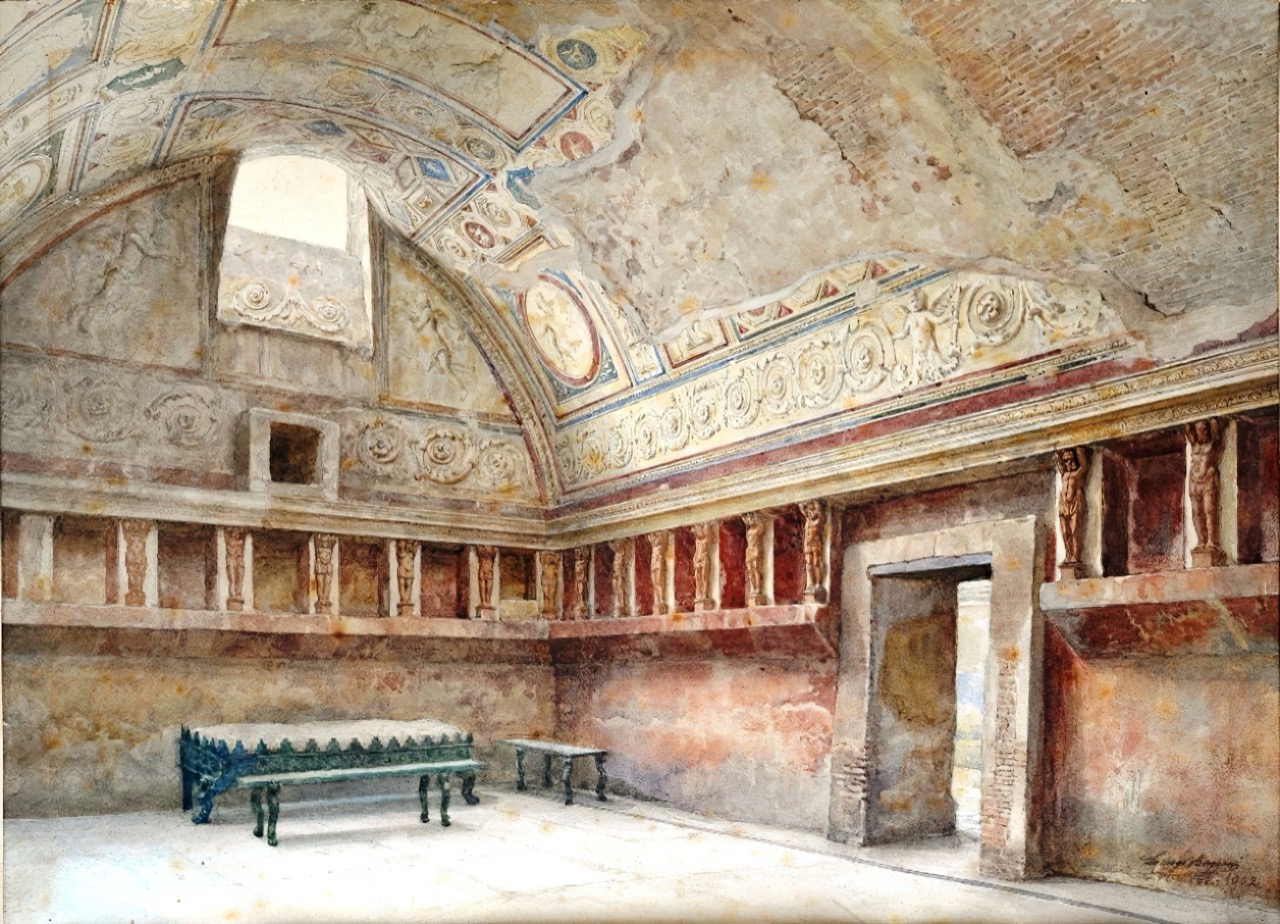
A richly decorated hall of the baths with a vaulted ceiling: people came here to socialize, exercise, and relax.
Lesson notes
The strigil: scrape instead of lather
The Romans hardly knew soap in the modern sense. They washed differently, and rather cleverly. They rubbed olive oil on the body, then warmed up and sweated in the steam room, and then used a special curved scraper — the strigil — to scrape the oil off the skin along with dirt, sweat, and dust.
The strigil was a curved metal (usually bronze) blade with a groove for the scraped-off dirt to run down. It was drawn over the arms, legs, and back in circular strokes; slaves or bath attendants helped reach the back. After scraping, people rinsed off with water.
People brought a whole kit to the baths: a little flask of oil (called an aryballos), strigils, and a sponge. The well-off came with servants who carried all this and helped them wash. So the Roman's key “bath gadget” was not a washcloth but a scraper — the strigil.